

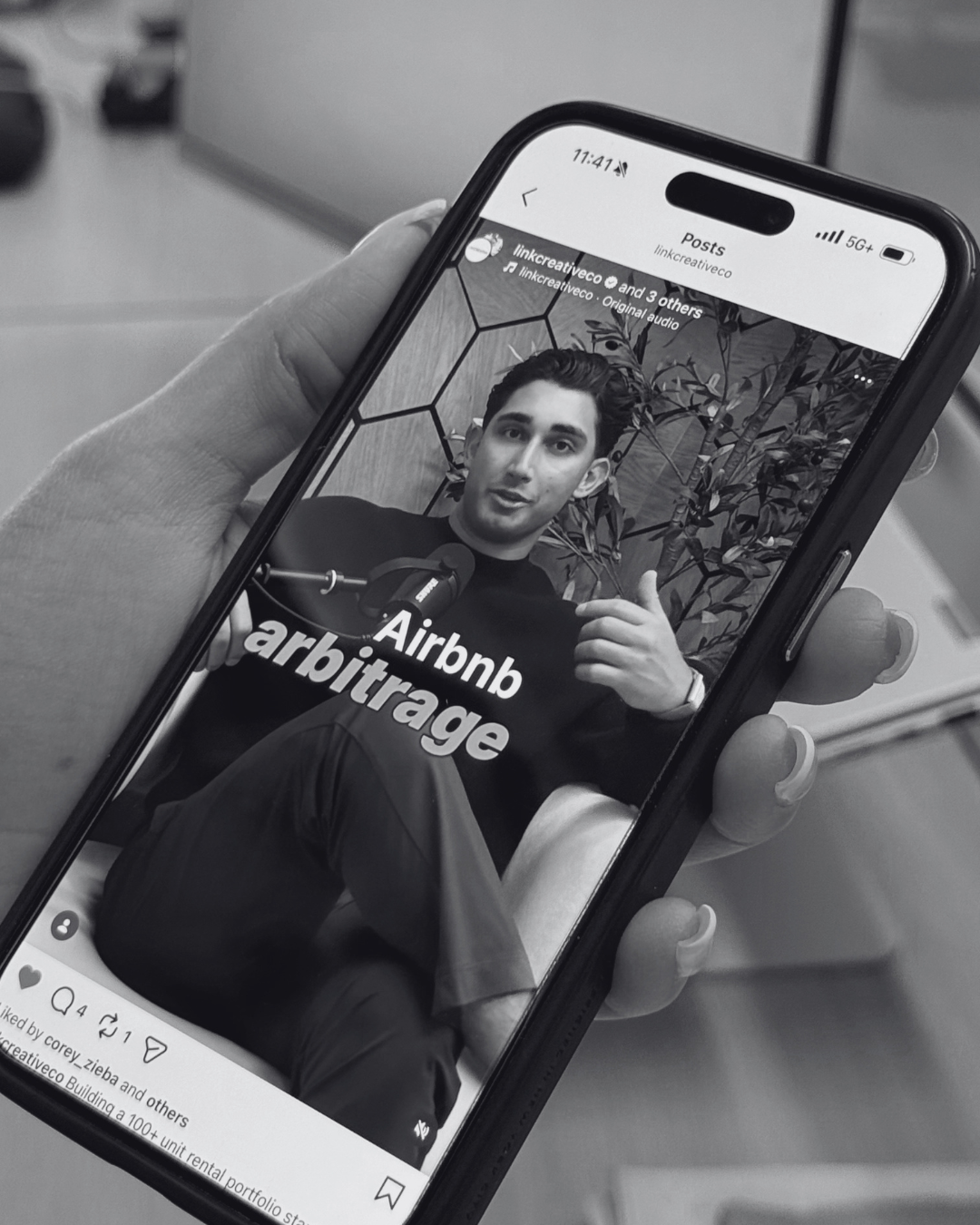
The 3-Second Rule: The Art of Stopping the Scroll
In today’s digital environment, attention is one of the most valuable assets a brand can earn. People move quickly across Instagram, TikTok, LinkedIn, YouTube Shorts, and even websites, making split-second decisions about what deserves their focus. If your content does not capture interest immediately, it gets ignored.
That is where the 3-second rule comes in. If your content does not give people a reason to stop within the first few seconds, you lose the opportunity before your message even begins. At Link Creative, this is a major part of how we approach modern content strategy, combining strong messaging, creative execution, and performance-driven thinking through services like AI Optimization & Implementation, Video & Photo Production, and Website Development.
What Is the 3-Second Rule in Marketing?
The 3-second rule in marketing refers to the narrow window brands have to earn attention before a user scrolls away. Whether it is a social media video, an ad, a landing page, or a homepage headline, the first few seconds decide whether someone stays or leaves.
This does not only apply to short-form video. It also matters in website development, where users often decide within moments whether a page feels relevant, trustworthy, and worth exploring. The same principle applies across digital channels: lead with clarity, create curiosity, and make the value immediately visible.
Why Most Brands Fail to Stop the Scroll
Many brands put effort into content but still struggle to generate engagement because their message takes too long to land. Some start with generic intros. Others rely on visuals that look polished but feel forgettable. In many cases, the content simply does not communicate why the viewer should care right away.
When users are scrolling quickly, there is no extra time for explanation. If the message is unclear, slow, or overly safe, the moment is lost. Reviewing strong examples from a company’s own work can often make this gap obvious. The best-performing creative usually gets to the point faster, communicates more clearly, and feels more native to the platform.
How to Stop the Scroll Effectively
Start With a Strong Hook
The first line, visual, or statement should create an immediate reaction. That reaction could be curiosity, recognition, surprise, or urgency. A strong hook gives people a reason to pause and pay attention. Instead of easing into the topic, high-performing content gets to the core message immediately.
Use Visual Disruption Early
Movement, contrast, framing, and bold text overlays can all help break the pattern of endless scrolling. The goal is not to be loud for the sake of it, but to create something visually noticeable enough to earn a second look. This is one reason why well-executed video production plays such a major role in modern content performance.
Deliver Value Up Front
People are more likely to stay engaged when they immediately feel they are getting something useful. That could be a fast insight, a direct answer, an unexpected fact, or a strong opinion. Instead of building slowly, high-performing content gives the audience a payoff early.
This approach also improves on-site engagement. In website development projects, strong above-the-fold messaging works the same way. Visitors should not have to search for what a company does, who it helps, or why it matters.
Design for Silent Consumption
Much of today’s content is watched without sound. That means visual storytelling, captions, and text overlays matter more than ever. If your message only works with audio, it is already losing a large portion of the audience.
Match the Platform
Content that performs on one platform may fail on another. Every channel has its own rhythm, expectations, and audience behavior. A strong strategy considers where the content lives, how people consume it there, and what kind of opening feels natural in that environment.
The Website Version of the 3-Second Rule
The 3-second rule is just as important on websites as it is on social media. When a user lands on a homepage or service page, they quickly assess whether the business looks credible, relevant, and easy to understand. If the page is cluttered, vague, or visually weak, they leave.
That is why strong website development should always support messaging, user experience, and conversion. The visual design needs to hold attention, but the structure and copy need to communicate quickly. Brands that do this well tend to reduce bounce rates and improve conversion opportunities across the funnel.
You can also see this principle reflected in real campaign and brand execution examples throughout the Link Creative portfolio, where creative direction and digital performance are built to work together rather than separately.
Why This Matters More Now
As content volume increases across every platform, competition for attention becomes more intense. Brands are no longer just competing against direct competitors. They are competing against every other post, ad, video, and notification in a user’s feed.
That is why attention strategy is now a creative requirement, not an optional enhancement. Brands need content that earns the pause, pages that communicate instantly, and systems that align design, messaging, and execution. This is exactly where Link Creative helps brands bridge the gap between creative quality and measurable performance.
Final Thoughts
Stopping the scroll is not about gimmicks. It is about understanding how people behave online and building content that respects their time and attention. The strongest brands do not wait too long to make their point. They lead with clarity, create interest immediately, and make the next step feel obvious.
If your content is not getting traction, the issue may not be the topic. It may simply be that the value is arriving too late. In a fast-moving digital world, the first 3 seconds can determine everything.